

The Importance of SKU Numbers in Inventory Management (UK Guide)


In the UK eCommerce and retail landscape, efficient inventory handling is the difference between profit and loss. Whether you run a fulfillment warehouse, ship via Royal Mail, or manage thousands of SKUs daily, one small code drives the entire operation: the SKU.
A Stock Keeping Unit is far more than a label. It connects inventory control, packaging, warehouse sortation, parcel sizing, delivery planning, and even customer satisfaction. When used correctly, SKU data helps businesses understand net weight vs gross weight, reduce the loss cost multiplier, plan for last-mile delivery, and even accelerate transit, meaning faster order movement through the supply chain.
This UK guide explains why SKU numbers sit at the heart of modern inventory management systems.
What Is an SKU? Meaning & Definition
A SKU (Stock Keeping Unit) is a unique internal code assigned to every product variation. If you’ve ever asked what a SKU is, the answer is simple: it is the primary product identifier used for product tracking, product categorization, and stock management.
Each SKU represents:
- Product type
- Size or variation
- Packaging type
- Storage location
- Weight attributes
- Supplier details
Integrated into a barcode system and used in conjunction with barcode scanning, SKUs enable automated stock tracking and precise warehouse inventory management.
Why SKU Numbers Are Essential for Efficient Inventory Control
The importance of the SKU number becomes clear when businesses scale. Without structured SKUs, stock levels, stock replenishment, and inventory turnover become guesswork.
SKU systems power:
- Real-time inventory updates
- Reliable inventory auditing
- Accurate purchase order tracking
- Smart demand forecasting
- Improved inventory accuracy
- Reduced inventory and waste
These benefits directly improve supply chain efficiency and lower delivery costs.
How SKUs Improve Accuracy in Fulfillment Warehouses
Inside a busy fulfillment warehouse, speed must never reduce accuracy. SKUs guide staff during picking and packing:
- Pickers scan SKU labels to find the exact item
- Packers choose the correct box for a small parcel size
- Teams apply suitable packaging based on the weight of the products
- Parcels move smoothly to dispatch
This improves distribution efficiency and lowers small parcel loss costs.
SKU Tracking & Real-Time Inventory Visibility
Using inventory software and retail inventory systems, SKU data gives:
- Full SKU visibility
- Instant stocktaking
- Deep inventory data analysis
- Accurate product stock levels
- Clear SKU-based reporting
This allows managers to monitor stock movement tracking and respond quickly.
SKU Systems & Warehouse Operations
SKU systems form the foundation of warehouse management and inventory control. They define where items are stored and how they flow through the building.
SKU Labels, Barcodes & Warehouse Sortation
Sortation is the process of grouping parcels for dispatch. Understanding the meaning of “sortation” is critical in warehouse tech.
With SKU labels and barcodes:
- Parcels are routed automatically
- Orders are grouped by delivery zones
- Errors reduce during dispatch
- Day delivery targets are easier to hit
Optimising SKU Assignments for Small Parcel Size Handling
SKU data includes packaging and size attributes. This helps determine:
- Whether the item qualifies as a small parcel size
- The weight of a shipment
- Required packing materials
- Courier pricing tiers
Correct SKU assignment prevents underpaid postage and delays.
SKUs in the Supply Chain: From Warehouse To Last Mile
SKU systems extend beyond storage into the entire delivery process. They influence route planning, delivery vehicle weight calculation, and overall delivery costs.
How SKU Data Drives Better Last Mile Delivery
In last-mile delivery, SKU visibility ensures:
- Correct parcel type loaded onto vehicles
- Efficient route planning
- Accurate weight vs gross weight handling
- Fewer failed deliveries
- Better customer experience
Reducing Loss Cost Multiplier with Better SKU Management
The loss cost multiplier increases when errors happen repeatedly. SKU accuracy reduces:
- Wrong item dispatch
- Damaged goods
- Returns processing
- Repacking time
- Re-delivery costs
This protects margins and improves customer satisfaction.
How SKU Numbers Help With Order Types & Packaging
Different orders require different packaging. SKU data links items to packaging rules based on the net and gross delivery process.
SKU Role in Pre-Order Stock Planning
Understanding pre-order meaning is key to stock planning. SKU history supports:
- Forecasting demand
- Planning stock replenishment
- Managing product assortment
- Avoiding overstock
Net Weight vs Gross Weight: Why It Matters for SKUs
Understanding net weight vs gross weight (or gross wt vs net wt) is vital.
- Net weight = product only
- Gross weight = product + packaging + tare weights
These values affect courier pricing and packaging choice.
Understanding Net Weight in Product Attributes
SKU labeling includes net weight as a core attribute. This helps with:
- Box size decisions
- Bubble wrap usage
- Accurate shipping labels
- Compliance with Royal Mail parcel rules
Best Practices for Creating & Managing SKU Codes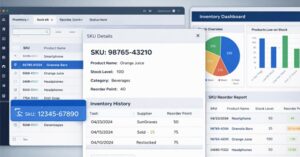
Effective SKU data management improves inventory accuracy and stock management.
Standardised SKU Naming Conventions
Use structured formats like:
CAT-SIZE-WEIGHT-PACK
This improves SKU differentiation and SKU optimization.
Inventory Software Tools & Automated SKU Tracking
Modern tools enable:
- Automated stock tracking
- Stock movement tracking
- Accurate SKU-based reporting
- Reliable inventory auditing
Conclusion: Why SKUs Matter to Every UK Business With Inventory
From warehouse shelves to last-mile delivery, SKU numbers control the entire flow of goods. They reduce the loss cost multiplier, optimise small parcel size handling, support route planning, and improve the customer experience.
For any UK business, mastering the SKU system is mastering inventory.
Frequently asked question
What is an SKU in inventory?
A SKU is a unique code used for product tracking and inventory control.
How do SKU numbers help fulfillment warehouses?
They guide picking, packing, and sortation for accurate dispatch.
What’s the difference between SKU and barcode/UPC?
SKU is internal; barcode is universal for scanning.
What does “sortation” mean in warehouse operations?
It is the grouping of parcels by route using SKU data.
How does net weight vs. gross weight affect inventory?
It determines packaging, pricing, and delivery method.
Why is SKU tracking important for last-mile delivery?
It ensures correct parcels reach the right customers.
How do SKUs reduce small parcel loss costs?
By assigning the right packaging and weight category.
What does “accelerate transit” mean in logistics?
It means speeding up parcel movement using accurate data.
How do SKUs help with delivery vehicle weight calculation?
They provide weight data for route planning.
How can SKU data improve customer satisfaction?
By reducing errors and ensuring fast, accurate deliveries.
