



Delivered Duty Paid (DDP) Shipping Explained

Understanding Delivered Duty Paid (DDP) shipping is critical for UK businesses, importers, and eCommerce sellers who want predictable costs and smooth international delivery. In global trade, delays, hidden fees, and customs confusion often damage customer trust. That is why DDP shipping’s meaning has become increasingly important in the UK market.
This guide explains DDP shipping, how it works, what it costs, and when it makes sense. It also covers real UK examples, customs clearance, VAT rules, and delivery management. Whether you are an online seller or a UK buyer, this page will help you decide if delivered duty-paid shipping is the right choice.
What Is DDP Shipping?
DDP shipping stands for Delivered Duty Paid, an international shipping agreement where the seller takes full responsibility for delivery.
Under-delivered duty paid means the seller pays all shipping costs, customs duties, import taxes, and clearance fees before the goods reach the buyer.
This means the buyer receives goods without unexpected charges at the destination.
DDP Definition in Shipping
The DDP definition in shipping comes from Incoterms, which are international trade rules published by the International Chamber of Commerce.
In simple terms:
- The seller is responsible for everything
- Goods are delivered fully cleared
- All risks and costs stay with the seller until delivery
This makes DDP shipping terms one of the most seller-heavy delivery agreements.
Delivered Duty Paid Meaning (Incoterms Explained)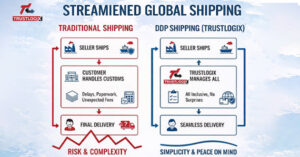
Under Incoterms®, Delivered Duty Paid (DDP) means the seller handles:
- International transport
- Export documentation
- Import clearance
- Customs duties
- Import VAT
- Final delivery to the destination
The buyer simply receives the shipment. This clarity is why the delivery duty paid meaning matters so much in international shipping.
How DDP Shipping Works
Understanding the DDP shipping process helps both sellers and buyers avoid disputes and delivery failures.
Seller Obligations Under DDP
Under DDP delivery terms, the seller must:
- Arrange international shipping
- Pay customs duties and import taxes
- Handle DDP customs clearance
- Manage delivery management systems
- Cover risk and costs until final delivery
This requires strong contract logistics services and reliable delivery management systems.
Buyer Responsibilities Under DDP
The buyer’s role is minimal:
- Provide accurate delivery information
- Accept delivery at the destination
- No customs involvement
Because the seller is responsible, DDP is attractive for buyers unfamiliar with import rules.
Risk & Cost Transfer Explained
In DDP shipping terms, risk transfers only after delivery. If goods are damaged during transit, the seller bears responsibility. This is a key difference compared to other Incoterms.
DDP vs Other Incoterms
Understanding the DDP meaning in shipping becomes clearer when compared to other delivery terms.
DDP vs DAP (Delivered at Place)
| Feature | DDP | DAP |
| Import duties | Seller pays | Buyer pays |
| VAT | Seller pays | Buyer pays |
| Customs clearance | Seller | Buyer |
| Buyer experience | Smooth | Risk of delays |
For UK eCommerce, DDP shipping often delivers better customer satisfaction.
DDP vs DDU (Delivered Duty Unpaid)
DDP vs. DDU highlights responsibility differences:
- DDU requires buyers to pay duties
- DDP (delivered duty paid) means no surprise charges
DDU is less popular now because unexpected fees harm conversion rates.
Why DDP Is Often Preferred for eCommerce Delivery
For online stores, DDP shipping for eCommerce improves:
- Checkout transparency
- Cart conversion rates
- Customer trust
- Delivery reliability
This is why many UK sellers choose duty-paid shipping.
DDP Shipping Costs (UK Focus)
One concern with DDP shipping costs is understanding the full landed price.
What Costs Are Included in DDP?
DDP shipping charges usually include:
- International freight
- Insurance
- Customs duties
- Import VAT
- Clearance fees
- Final-mile delivery
Together, these form the landed cost.
Landed Cost Breakdown in the UK
For UK imports, landed cost includes:
- Product value
- Shipping fees
- UK customs duty
- UK VAT (20% standard)
- Courier handling charges
With DDP international shipping, the seller absorbs these costs upfront.
VAT, Duties, & Customs Fees for UK Deliveries
UK imports require:
- Import VAT
- Commodity-specific customs duty
- Accurate customs declaration
Failure here can result in delayed delivery and increased costs.
How DDP Affects UK Importers
DDP shipping simplifies imports but requires strong logistics coordination.
Customs Clearance in the UK
Under DDP shipping and customs clearance, sellers must:
- File UK customs entries
- Provide HS codes
- Pay duties before delivery
Professional contract logistics companies help manage this process.
VAT Refunds & UK EORI Requirements
For sellers using DDP shipping, UK EORI registration may be required. VAT refunds are possible but require proper documentation and compliance.
Impact on Delivery Management and Logistics
DDP improves:
- Delivery predictability
- Order fulfillment management system efficiency
- Customer satisfaction
But it also increases operational responsibility.
Pros & Cons of DDP Shipping
Advantages for Buyers
- No hidden fees
- Faster delivery
- Clear pricing
- Reduced customs stress
This explains why delivered duty-paid shipping is buyer-friendly.
Challenges for Sellers (UK Example)
Seller’s face:
- Higher upfront costs
- VAT recovery complexity
- Risk of miscalculated duties
Strong global logistics and supply chain management are essential.
When Not to Use DDP
Avoid DDP shipping when:
- Import regulations are unclear
- VAT recovery is difficult
- Shipping low-margin goods
In such cases, DAP may be more effective.
Practical Examples of DDP in Action: UK Consumer eCommerce Delivery
A UK customer orders electronics from Germany:
- The seller uses DDP delivery
- Pays UK VAT and duty
- The customer receives the item without charges
Result: higher trust and repeat orders.
Example: B2B UK Goods Import Using DDP
A UK manufacturer imports machinery:
- Seller handles DDP customs clearance
- No production delays
- Predictable landed cost
This supports contract logistics planning.
Sample Cost Calculations
Product value: £1,000
Shipping: £150
Customs duty: £60
VAT: £242
Total DDP shipping cost: £1,452
The buyer pays nothing extra.
Conclusion: Is DDP Shipping Right for You?
Delivered Duty Paid (DDP) shipping offers clarity, control, and customer satisfaction, especially in the UK market. While it increases seller responsibility, it simplifies delivery, reduces disputes, and improves trust.
For eCommerce brands, B2B importers, and logistics-driven businesses, DDP (delivered duty paid) means predictable costs and smoother international trade. If your business can manage customs, VAT, and delivery management, DDP may be the strongest shipping strategy available.
Frequently asked questions
Can I Use DDP for All Shipping Methods?
Yes. DDP shipping works for air, sea, road, and courier services, as long as sellers can clear customs.
Who Pays for DDP Shipping in the UK?
The seller pays all costs. This includes import duty in DDP shipping and VAT.
Is DDP Better Than DAP for UK eCommerce?
For customer experience, yes. DDP shipping for businesses reduces checkout friction and disputes.
Does DDP Include Customs Clearance?
Yes. DDP shipping meaning includes full customs clearance.
Is DDP Risky for Sellers?
It can be if duties or VAT are miscalculated. Strong logistics partners reduce risk.
Can Small Businesses Use DDP Shipping?
Yes, but they should use professional contract logistics services.
Does DDP Cover Damaged Goods?
Risk stays with the seller until delivery, including damage to goods, meaning during transit.
