



Stock Control System: Methods, Software & Inventory Optimization

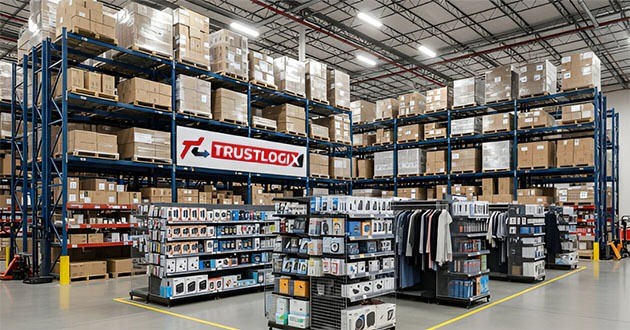
Running a business in the UK today means balancing customer demand, increasing storage costs, and complex supply chain pressures. Whether you sell finished goods, make products, or have a warehouse, effective stock control is crucial for profitability and growth.
A strong stock control system helps businesses avoid stockouts, decrease overstocking, and keep the right stock in inventory at the right time. In this guide, we explain how stock control works, the best stock control methods, how charts and software help, and how UK businesses can enhance inventory with modern systems.
What is stock control?
Stock control is the process of dealing with how much inventory a business holds, where it is stored, and when it should be restocked. It guarantees that finished products and raw materials are offered to meet customer requests without tying up too much cash in additional stock.
Good focuses on:
- Tracking stock precisely
- Preserving ideal stock levels
- Reducing waste and losses
- Supporting smooth processes across the supply chain
Without proper control, businesses risk inventory mismanagement, lost sales, and rising holding costs.
Stock control vs inventory control (what’s the difference?)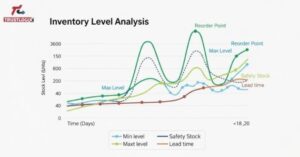
Many UK businesses use these terms interchangeably, but there is a subtle difference.
An inventory control system focuses on the broader inventory lifecycle, purchasing, valuation, resolution, and accounting.
On the other hand, it deals specifically with physical stock movement, stock levels, and replenishment decisions.
In practice, modern inventory control and stock control systems work together inside a single inventory management software platform.
What is a stock control system?
A stock control system is a structured process or digital solution that helps businesses monitor, manage, and optimize stock levels in real time. It combines people, processes, and technology to create a reliable control system for inventory.
What a modern stock control system tracks
A modern stock control system tracks:
- SKUs and finished goods
- Stock locations (warehouses, stores, bins)
- Work-in-progress (WIP)
- Batches, lots, and expiry dates
- Stock movement tracking in real time
This visibility improves inventory accuracy and supports smarter decision-making.
Benefits: reduce stockouts, reduce overstock, improve cash flow
An effective stock control system helps UK businesses:
- Reduce stockouts and missed sales
- Minimise overstocking and excess storage costs
- Improve flow by freeing tied-up capital
- Improve inventory accuracy and forecasting
- Meet customer demands consistently
Stock Control Methods
Choosing the right stock control methods depends on business size, demand patterns, and lead time reliability.
Reorder point (ROP) + safety stock
The reorder point calculation defines when new stock should be ordered. It considers:
- Average demand
- Supplier lead time
- A safety stock level for demand spikes
This method supports predictable replenishment and prevents shortages.
EOQ + minimum/maximum levels
The economic order quantity (EOQ) method calculates the ideal order size that balances ordering costs with inventory carrying costs. Combined with minimum and maximum stock levels, EOQ improves stock level management.
ABC analysis and cycle counting
ABC inventory analysis categorizes stock by value and importance:
- A-items: high value, tight control
- B-items: moderate value
- C-items: low value, simple control
Cycle counting replaces annual stock audits with regular checks, improving accuracy without disruption.
JIT vs buffer stock (when each works)
Just-in-time inventory (JIT) reduces holding costs but relies on reliable suppliers.
Buffer stock offers protection against uncertainty but increases storage costs. Many UK businesses use a hybrid approach.
Stock Control Charts (Inventory Control Charts)
Stock control charts visually show how inventory levels change over time.
What is a stock control chart?
A stock control chart (or inventory control chart) displays:
- Maximum stock level
- Minimum stock level
- Reorder point
- Lead time
It helps teams understand trends and take timely action.
Stock control chart example
For example, a retailer tracks daily sales of finished products. When stock drops to the reorder level, the system triggers a purchase order before stock runs out.
How to create a stock control chart step-by-step
- Record opening stock
- Track daily stock usage
- Mark reorder point and lead time
- Update regularly using real-time data
Stock Replenishment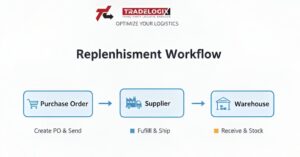
Stock replenishment is the process of restocking inventory to maintain optimal levels.
What is stock replenishment, and why does it matter?
A strong stock replenishment process ensures businesses can meet customer demand without over-ordering or delays.
Replenishment triggers
- Minimum stock level reached
- Demand-based forecasting
- Periodic review schedules
Common replenishment mistakes (and fixes)
- Ignoring lead time → use real-time tracking
- Poor demand forecasting → review historical data
- Manual errors → automate replenishment strategy
Inventory Stock Days (How Many Days of Stock to Hold?)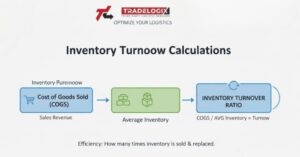
Inventory stock days show how long the current inventory will last based on the sales rate.
How to calculate inventory days
Inventory Stock Days =
Average Inventory ÷ Daily Sales
This metric supports better stock level management and demand planning.
Benchmarks by business type
- Retail: 30–60 days
- Warehouse: 45–90 days
- Manufacturing: varies by production cycle
Stock Control Software (UK)
Modern stock control software UK businesses use offers automation, accuracy, and compliance.
Must-have features
- Barcode-based inventory system
- Real-time inventory tracking
- Reorder automation
- Inventory dashboard and analytics
- Purchase order management
Cloud vs on-premise
Cloud-based inventory systems offer scalability, remote access, and lower upfront costs—ideal for UK SMEs.
Integrations
The best systems integrate with POS, accounting, e-commerce platforms, and purchasing tools.
Stock Control Software for Small Business
Stock control software for small businesses must be simple, affordable, and scalable.
Barcode inventory system for small business
Barcode scanning improves accuracy, speeds up audits, and reduces manual errors. It is a key feature of modern inventory stock control software.
Simple stock audit routine
Small teams benefit from regular cycle counting, automated reports, and clear stock management workflows.
Industry Use Cases
Manufacturing stock control software
Manufacturers need tools for WIP tracking, BOMs, batch control, and lead time management.
Restaurant stock management systems
Restaurants manage recipes, wastage, par levels, and supplier variability. Accurate restaurant inventory control protects margins.
Warehouse stock control
Warehouse systems focus on bin locations, picking routes, and replenishment to pick faces.
How to Choose the Right Stock Control System
Checklist
- Business size and growth plans
- Number of SKUs
- Locations and warehouses
- Reporting and analytics needs
- Barcode and automation features
Implementation plan
- Clean inventory data
- Perform stocktake
- Configure system
- Train staff
- Go live and optimize.
Frequently asked questions
What is the best stock control method?
The best method depends on demand, lead time, and product value. Many UK businesses combine EOQ, reorder points, and ABC analysis.
What is a stock control chart?
It is a visual tool showing stock levels, reorder points, and lead times to support better decisions.
How do you calculate reorder level?
Reorder level = Average daily usage × Lead time + Safety stock.
What is stock replenishment?
It is the process of refilling inventory to maintain optimal stock levels.
What is a good inventory stock days number?
This varies by industry, but 30–60 days is common for retail.
How can I improve stock accuracy?
Use barcode scanning, cycle counting, and real-time inventory monitoring systems.
Why do businesses struggle with stock control?
Poor data, manual processes, and a lack of forecasting tools are the main causes.
