



How to Connect Shopify Amazon Integration and Fix Common Shopify Amazon Issues

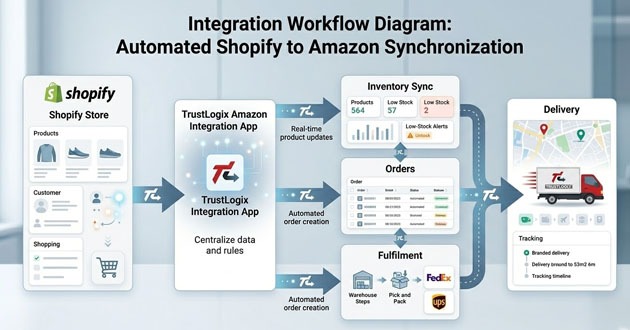
Running an e-commerce business today frequently means selling across multiple sales channels. Many merchants in the UK use both Shopify and Amazon to attract more customers. When these platforms work together, you can be able to products, orders, and deliveries from a single system. This process is known as Shopify Amazon integration.
With the right situation, you can connect Shopify to Amazon, sync your inventory, automate fulfilment, and expand shipping speed. However, some sellers face problems like product sync errors or delayed order management. In this guide from Trustlogix, we describe how Shopify and Amazon integration works, how to set it up step-by-step, and how to fix common Shopify issues amazon sellers face.
Shopify Amazon Integration: What It Means for Your Store
Can You Connect Shopify to Amazon?
Yes, you can effortlessly connect Shopify to Amazon using an integration app, third-party connector, or a custom API. Once associated, your Shopify storefront and Amazon marketplace share product data, orders, and inventory information.
The integration makes a bridge between your backend systems so your list, SKUs, and pricing stay reliable. This also helps suppliers manage their Amazon inventory and Shopify store without converting between dashboards.
How Shopify and Amazon Work Together
When Shopify and Amazon integration is active, both platforms connect through automated data sync. Here is how it works:
- Your product catalogue from Shopify is synced with Amazon listings.
- When a customer places an order, the system activates order sync.
- Inventory informs automatically across both platforms to avoid stockouts.
- Shipping and tracking notifications are sent to customers.
This multichannel arrangement permits sellers to manage all sales channels from a single Shopify admin dashboard.
Who Needs a Shopify Amazon Integration
A Shopify integration setup is useful for:
- Shopify stores scaling into international markets
- Seller’s imperfect automated inventory management and logistics
- Businesses using Amazon’s FBA or MCF fulfilment network
For rising brands, integrating Shopify and Amazon decreases manual work and improves order processing efficiency.
Benefits of Connecting Shopify to Amazon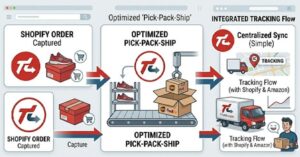
Sync Inventory Across Channels
One of the main advantages of Shopify Amazon integration is inventory sync. When your inventory levels change on Amazon or Shopify, the system automatically updates across both platforms.
These stop overselling and reduce the risk of stockouts in your warehouse or fulfilment network.
Automate Orders and Fulfilment
When customers buy from your Shopify store, the integration automatically routes orders to Amazon’s fulfillment network. Amazon can then pick, pack, and ship the product using its logistics setup.
This automation removes manual steps in order management, allowing sellers to focus on growing their e-commerce business.
Improve Delivery Speed and Tracking
Amazon’s delivery network is known for speed and reliability. Through Shopify delivery integration, merchants can offer faster shipping and real-time tracking updates.
Customers receive notifications at checkout, dispatch, and delivery stages, which improves the overall shopping experience.
Reduce Manual Work and Overselling
Without integration, sellers must physically update product listings, pricing, and inventory levels. This increases errors and wastes time.
With Shopify integrations, tasks like catalogue sync, shipping updates, and order processing are automated.
How to Connect Shopify to Amazon Step by Step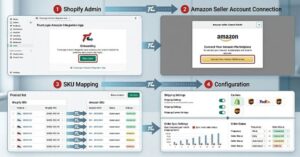
Choose the Right Shopify Amazon Integration Method
There are several ways to connect Shopify to Amazon:
- ERP or inventory management systems
- Custom API integrations
- Official Amazon integration app
- Third-party connector apps
Your choice depends on business size, automation needs, and the number of sales channels you manage.
Connect Your Amazon Seller Account
First, log in to the Shopify admin and install an Amazon integration app. Then connect your Amazon seller account.
Once authorized, the system will link your storefront with your Amazon Marketplace account.
Map Products, SKUs and Categories
Next, match Shopify products with Amazon listings using SKU mapping.
This step guarantees that the correct catalogue data is shared between platforms. Proper planning stops duplicate listings and inventory mismatches.
Set Shipping and Delivery Preferences
Arrange your shipping settings to decide how orders will be fulfilled. Options include:
- Third-party 3PL logistics providers
- Fulfillment by Amazon (FBA)
- Amazon MCF for multichannel fulfilment
These options control how products move from the warehouse to the customer.
Turn On Order Sync, Tracking and Notifications
Finally, enable order sync, tracking, and customer notifications.
This allows Shopify and Amazon to communicate real-time updates about order status, shipping progress, and delivery confirmation.
Best Shopify Amazon Integration Options
Amazon MCF and Buy with Prime App
Amazon suggests its own integration solution through MCF and Buy with Prime. This allows Shopify stores to use Amazon’s fulfillment network while keeping their brand storefront.
Orders are packed and shipped from Amazon warehouses, often using unbranded packaging.
Third-Party Shopify Amazon Apps
Many merchants choose third-party apps because they offer additional automation features.
These apps provide:
- Real-time shipping rates
- Advanced inventory mapping
- Product catalogue sync
- Order automation
Order Management and ERP Integrations
Large businesses often use ERP systems for advanced order routing and financial tracking.
These systems connect Shopify, Amazon, and warehouses to create a unified ecommerce backend.
Custom API Integrations for Advanced Stores
Some companies build custom API integrations. This allows developers to create highly customized automation for complex workflows.
Although powerful, this method requires technical resources.
Shopify Delivery Integration: Shipping, Fulfilment and Tracking
Using Amazon Inventory to Fulfill Shopify Orders
With Shopify delivery integration, Shopify orders can be fulfilled using Amazon inventory stored in Amazon warehouses.
This means faster delivery without handling separate logistics operations.
Delivery Tracking and Customer Notifications
Once an order is shipped, customers receive tracking notifications directly from Shopify.
This transparency improves customer trust and reduces support requests.
Unbranded Packaging and Fulfilment Settings
Amazon MCF allows sellers to ship products in unbranded packaging. This keeps the focus on your Shopify brand rather than Amazon.
UK Delivery Considerations for Shopify Stores
UK merchants should consider:
- International marketplace rules
- Currency settings
- Local shipping carriers
- VAT compliance
These factors affect how Shopify and Amazon integration is achieved in the UK ecommerce market.
Common Shopify Amazon Issues and How to Fix Them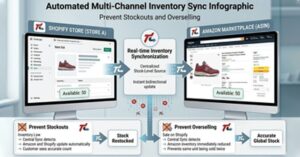
Products Not Syncing Between Shopify and Amazon
If your products do not appear on Amazon, the issue is usually related to incorrect catalogue sync or missing product features.
Fix this by reviewing product data and ensuring your integration app has full permissions.
SKU Mapping Errors
Incorrect SKU mapping can create duplicate listings or inventory errors.
Always guarantee that SKUs match across Shopify and Amazon.
Inventory Mismatch and Overselling Problems
Inventory mismatches often occur when inventory management settings are not synced.
Enable automatic inventory updates to prevent overselling and stockouts.
Amazon Orders Not Importing into Shopify
If orders are not appearing in Shopify, check the order sync settings in your integration dashboard.
Sometimes the issue occurs due to API limits or incorrect marketplace configuration.
Shipping Rates, Delivery Settings or Fulfilment Delays
Incorrect shipping configurations can delay deliveries.
Make sure your fulfilment network and shipping rules match the regions you sell to.
Marketplace, Currency or Region Problems in the UK
For UK sellers, ensure that:
- VAT rules are configured
- Currency is set to GBP
These steps resolve most Shopify issues amazon sellers face.
Best Practices for a Smooth Shopify and Amazon Setup
Keep Product Data Consistent
Always maintain reliable product titles, descriptions, and catalogue data across platforms.
This improves product visibility and prevents sync errors.
Use Real-Time Inventory Sync
Real-time inventory updates help maintain accurate stock levels and prevent stockouts.
Test Order Routing Before Going Live
Before launching your integration, place test orders to confirm that order routing, fulfilment, and shipping notifications work properly.
Review Returns and Customer Support Workflows
A clear returns process helps maintain customer satisfaction and keeps your operations organized.
Final Thoughts on Shopify Amazon Integration
Best Setup for Small Stores
Small e-commerce stores should start with simple integration apps that automate product listings and inventory sync.
Best Setup for Scaling Brands
Growing brands often use ERP integrations, multichannel automation, and advanced logistics tools to manage large product catalogues.
Next Steps to Connect Shopify to Amazon
If you want to expand your e-commerce reach, the best step is to connect Shopify to Amazon and automate your operations.
With the right Shopify Amazon integration, you can manage inventory, improve fulfilment, and deliver faster shipping to customers across the UK and beyond.
Frequently asked questions
Is Shopify Amazon Integration Available in the UK?
Yes. UK merchants can use multiple Shopify integrations to connect Shopify with Amazon marketplaces and fulfilment services.
What Is the Best App to Connect Shopify to Amazon?
The best option depends on your business needs. Many sellers use Amazon MCF apps or third-party connectors for advanced automation.
Do I Need Coding to Connect Shopify to Amazon?
No coding is required for most integration apps. However, custom API integrations may require developer support.
Can Amazon Fulfill Shopify Orders?
Yes. Using Amazon MCF, Shopify orders can be fulfilled directly from Amazon warehouses.
How Long Does Shopify Amazon Integration Take?
Basic integration can take a few hours, while advanced setups with ERP systems may require several days.
What Causes Common Shopify Amazon Issues?
Most Shopify issues amazon sellers face are related to incorrect SKU mapping, inventory sync errors, or shipping configuration problems.
